

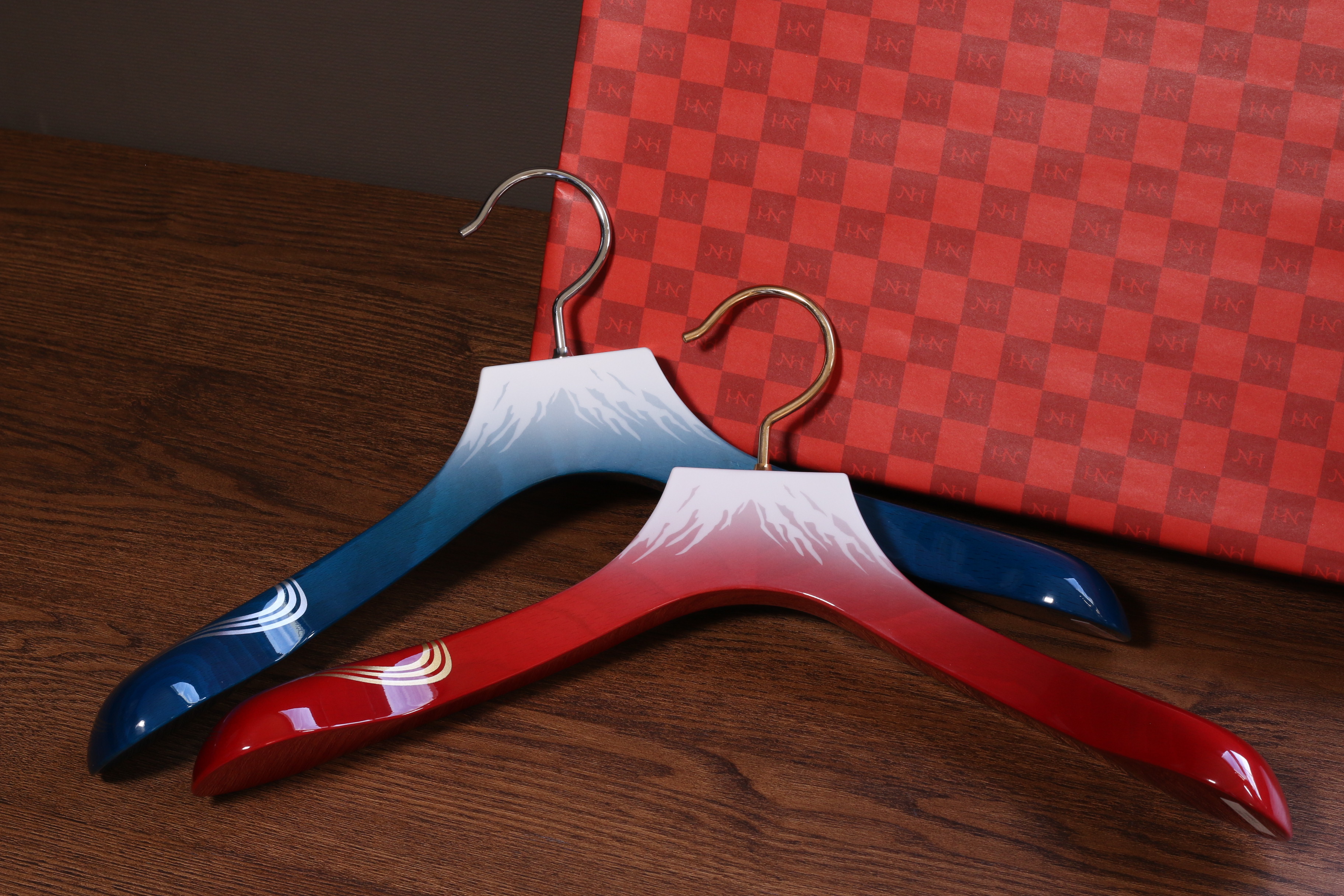
In Japanese culture, there is a long tradition of finding beauty in everyday objects. Items that may seem simple or purely practical often become refined through careful design and use. This is part of why Japanese products are admired around the world — they balance utility with aesthetics.
Think about the chopstick. At first, it was nothing more than a tool for eating. Over time, its design, materials, and presentation have made it an object that represents Japanese dining culture worldwide. The same can be said of the teacup, which grew from a functional vessel into an expression of hospitality, or the bento box, which turned an ordinary meal container into a symbol of thoughtful preparation and visual harmony.
Clothing in Japan is also seen as more than fabric — it’s an extension of the self. And just as clothing reflects personal care, the hanger plays a quiet but important supporting role. A good hanger keeps a jacket’s shoulders in shape, prevents stretching, and helps garments stay neat and presentable. In this sense, the hanger protects not only clothing but also the way a person presents themselves to the world.
When a hanger is carefully shaped, smoothly finished, and made with quality materials, it stops being “just a tool.” It becomes part of a daily ritual — a moment of care when putting clothes away and a reminder of craftsmanship when opening the closet. Like chopsticks, teacups, or bento boxes, the hanger shows how Japanese design can transform something ordinary into something iconic.
In the end, the value of a proper hanger lies in this balance: it is useful, refined, and quietly essential. It proves that even the simplest objects, when designed with care, can elevate everyday life.